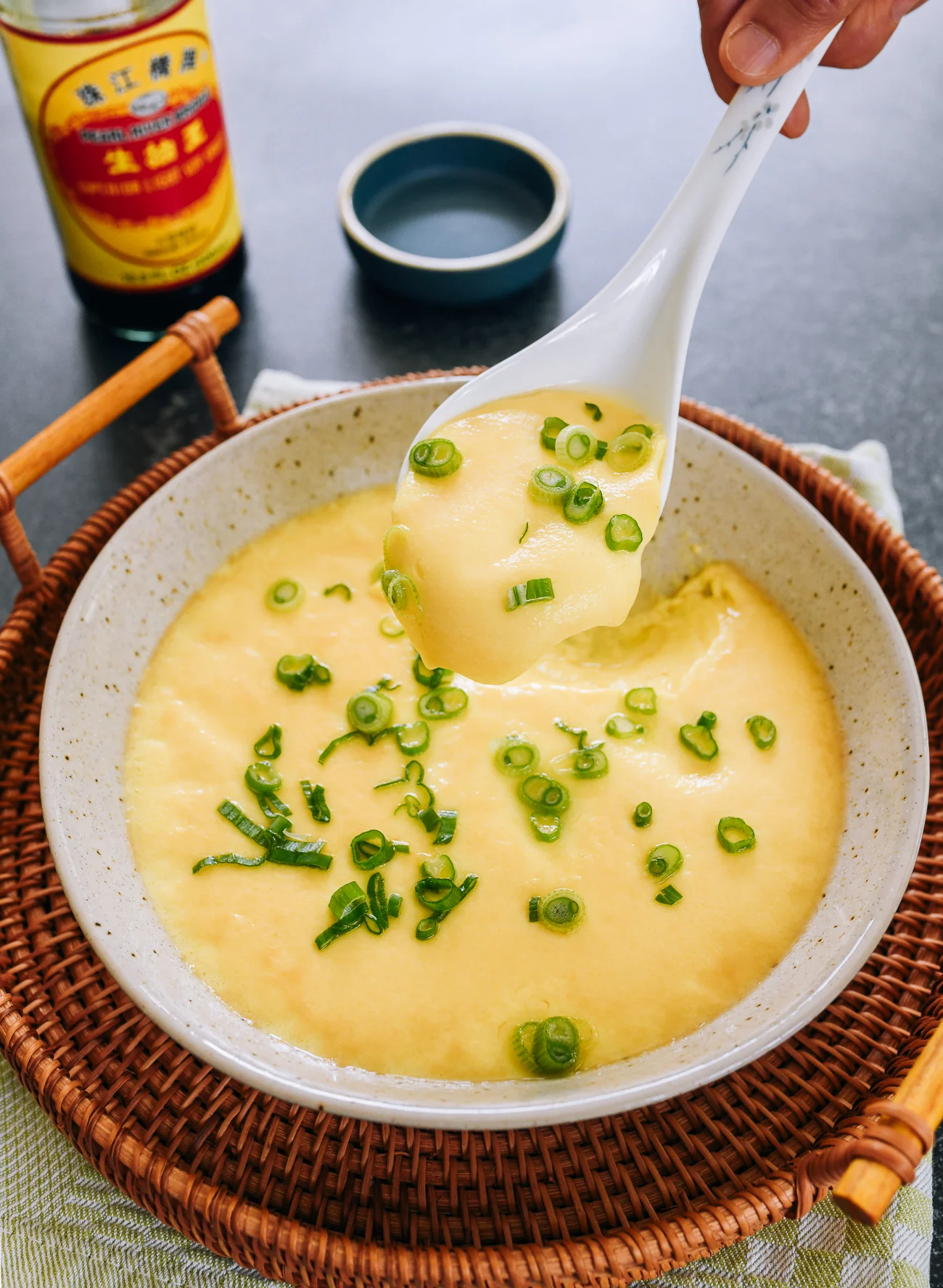
Chinese Steamed Eggs: Achieve Heavenly Softness with This Guide
There are few dishes that encapsulate comfort and culinary elegance quite like Chinese Steamed Eggs, known affectionately as 蒸蛋羹 (zhēng dàn gēng). This seemingly simple dish, requiring minimal ingredients, holds a revered spot in Chinese cuisine, often evoking warm memories of childhood and home-cooked meals. Its magic lies in its ability to transform humble eggs into a masterpiece of texture: smooth, slippery, and unbelievably soft, almost dissolving in your mouth like a delicate custard. But achieving this heavenly softness requires a touch of finesse – a perfectionist's approach that we’re here to demystify.
Far from being just a side dish, perfectly prepared Chinese steamed eggs can be a centerpiece, a soothing meal for the unwell, or a delightful introduction to solid foods for youngsters. It's a testament to how meticulous attention to detail can elevate the everyday into something truly extraordinary. Forget tough, rubbery, or cratered textures; with this comprehensive guide, you’ll unlock the secrets to flawless, silky-smooth
steamed eggs every single time.
The Allure of Chinese Steamed Eggs: More Than Just a Dish
Chinese Steamed Eggs aren't just food; they're a cultural embrace, a symbol of care and simplicity. For many, it's the ultimate comfort food, a dish prepared by mothers and grandmothers, carrying generations of love within its delicate folds. The beauty lies in its deceptive simplicity: eggs, water, and steam. Yet, these few components, when handled with precision, yield a dish that is both profoundly satisfying and incredibly delicate.
What truly sets exceptional Chinese steamed eggs apart is their texture. We're aiming for a consistency akin to silken tofu or a delicate crème brûlée, but savory. Imagine a surface so smooth it reflects light, and a spoonful that quivers gently, melting on the tongue without any hint of firmness or porosity. This ideal texture is the holy grail for any aspiring steamed egg enthusiast, and thankfully, it's an attainable goal with the right techniques.
This dish is also incredibly versatile. While often served simply with a dash of soy sauce and sesame oil, it can be enhanced with various toppings, from chopped green onions and cilantro to minced pork, shrimp, or even preserved vegetables. Its mild flavor makes it an excellent canvas for exploration, allowing you to tailor it to your preference while still celebrating the core essence of beautifully cooked
steamed eggs.
Laying the Foundation: Essential Principles for Perfect Steamed Eggs
To craft steamed eggs that are truly "heavenly soft," attention to detail begins long before the pot hits the stove. It starts with your ingredients and your preparation methods.
Ingredient Quality Matters
As with any simple recipe, the quality of your core ingredients significantly impacts the final outcome. Use fresh, good-quality eggs. While specific sizes can be adjusted, consistency is key. Large eggs are a common standard, often measuring around 50-60ml each.
The Golden Ratio: Egg-to-Water Precision
Perhaps the single most critical factor in achieving the desired texture is the egg-to-water ratio. Too much egg will result in a firmer, denser custard, akin to a frittata, while too much water will prevent the mixture from setting properly, leaving you with a runny, soup-like consistency.
The ideal volume ratio for Chinese steamed eggs is around
1 part egg to 2 parts water. For instance, if you're using two large eggs that measure a combined 100ml, you'll want to add 200ml of water. It's advisable to measure the egg volume after beating, as egg sizes can vary slightly. For an even richer flavor profile, consider replacing some or all of the water with good quality chicken stock. This simple substitution adds remarkable depth without overpowering the delicate egg flavor.
Water Temperature is Key
While it might seem counterintuitive to add warm water to raw eggs, this step is crucial for achieving a smooth texture. Using warm water (around 45°C or 113°F) helps the beaten egg and water combine more thoroughly, preventing separation and creating a more homogeneous mixture. Cold water can sometimes lead to a slightly lumpier texture or a less stable emulsion.
Don't fret about needing a thermometer! A simple trick is to boil a small amount of water, then pour it into an equal amount of tap water. This quickly brings the combined water to a perfectly usable warm temperature. The goal is warm, not hot – you don't want to start cooking the eggs prematurely.
Emulsification and Straining: The Path to Silky Smoothness
Once you've measured your eggs and water (or stock) and adjusted the water temperature, the mixing process begins.
1.
Gentle Beating: Lightly beat the eggs in a bowl until the yolks and whites are just combined, and the mixture is uniform. Avoid over-beating or whisking vigorously, as this incorporates too much air. Excess air bubbles can lead to a porous, "scrambled" texture with visible holes once steamed.
2.
Combine and Stir: Gradually add the warm water/stock to the beaten eggs, stirring gently to combine everything thoroughly.
3.
Strain for Perfection: This step is often overlooked but is a secret weapon for heavenly smooth
steamed eggs. Pour the egg mixture through a fine-mesh sieve into your steaming dish. Straining removes any unmixed egg white bits, chalazae, or tiny air bubbles, resulting in an impeccably smooth surface and texture. You might need to strain it twice for ultimate perfection.
4.
Skim Bubbles: After straining, let the mixture settle for a minute. If any small bubbles remain on the surface, gently skim them off with a spoon or dab them with a piece of kitchen paper.
Mastering the Steam: Technique for Silky Smoothness
With your perfectly prepared egg mixture, the next phase is the steaming itself. This is where patience and precision pay off.
The Steaming Setup: Pre-boil and Cover
1.
Pre-boil the Water: Always ensure your steamer pot or wok has water boiling vigorously *before* you place the egg mixture inside. This creates a consistent steaming environment from the start, preventing uneven cooking. Using cold water and gradually heating it can lead to a longer, less predictable cooking time.
2.
Cover Your Dish: This is a non-negotiable step for achieving a smooth surface. Place a lid (like a small plate that fits inside your steamer) or aluminum foil tightly over your bowl of egg mixture before placing it in the steamer. This prevents condensation from dripping onto the surface of the eggs, which would create an unappealing, pockmarked texture.
3.
Gentle Steam is Best: Once the egg mixture is in the steamer, reduce the heat to medium-low. You want a gentle, consistent steam, not a raging boil. Too high heat will cause the eggs to cook too quickly and become porous, resembling scrambled eggs rather than a delicate custard.
Steaming Time and Indicators of Doneness
The cooking time will vary depending on the size of your dish, the thickness of the egg mixture, and the intensity of your steam. As a general guide, most Chinese steamed eggs will take between 10-15 minutes to cook over medium-low heat.
How do you know when it's done? The center of the custard should be set but still have a slight wobble when gently shaken. It should not be watery, nor should it feel firm or hard. A toothpick inserted gently into the center should come out clean, or with just a slight moistness, indicating it's just cooked through. Overcooking is the enemy of heavenly soft
steamed eggs, leading to a firmer, sometimes rubbery texture with an unappealing "holey" appearance.
High Altitude Adjustments
For those living at higher altitudes (typically above 3,000 feet), you may find that steaming times need to be slightly extended due to lower atmospheric pressure and the lower boiling point of water. Expect to add a few extra minutes to your usual steaming time to achieve the desired doneness.
While our focus today is on the delicate custard, it's worth noting that steaming is a truly transformative method for all kinds of egg preparations. If you've ever struggled with traditional methods, you might find solace in the consistent results steaming offers. For those curious about the broader advantages of this technique, particularly how it revolutionizes the process of making perfectly peeled, hard-cooked eggs, explore our guides on
Unlock Easy Peeling: Why Steamed Eggs Beat Boiled Every Time and
Master Steamed Eggs: Your Guide to Flawless, Perfectly Peeled Results.
Beyond the Basics: Elevating Your Steamed Egg Experience
Once you've mastered the foundational techniques, you can begin to experiment and personalize your Chinese steamed eggs.
Flavor Variations
*
Savory Additions: A dash of light soy sauce, a drizzle of sesame oil, or a pinch of white pepper can be stirred into the egg mixture before steaming for added depth.
*
Umami Boost: As mentioned, chicken stock instead of water provides a rich, savory base. For an even more complex flavor, you could use mushroom broth or a light dashi.
*
Toppings Galore: Once cooked, garnish your steamed eggs with chopped green onions, a sprinkle of fresh cilantro, a few drops of chili oil for a kick, or even a tiny amount of crispy fried shallots. For a heartier dish, add finely minced meat (pork or chicken), small shrimp, or reconstituted dried shiitake mushrooms to the base of the steaming dish before pouring in the egg mixture. These will steam alongside the eggs, infusing their flavors.
Serving Suggestions
Chinese steamed eggs are incredibly versatile. They are often served simply alongside a bowl of steamed rice, where their delicate texture perfectly complements the grains. They can also be enjoyed as a light and nutritious breakfast, a soothing lunch, or a comforting side dish with a larger family meal. Their gentle flavor and soft texture make them an ideal dish for children or anyone needing a easily digestible meal.
Troubleshooting Common Issues
*
Holes/Porous Texture: This is usually due to steaming at too high a heat or over-beating the eggs, incorporating too much air. Reduce heat, ensure gentle beating, and strain.
*
Too Hard/Firm: Almost always a sign of overcooking. Reduce steaming time and check for doneness more frequently.
*
Runny Center: Undercooked. Steam for a few more minutes, ensuring your steamer maintains a consistent temperature.
*
Watery Surface/Pockmarks: Condensation dripping from the steamer lid. Always cover your egg dish with a plate or foil.
Mastering Chinese steamed eggs is a journey of precision, but one that is incredibly rewarding. With a little attention to ratios, temperature, and steaming technique, you'll consistently create a dish that is both a visual delight and a taste of heaven.
Achieving heavenly soft Chinese steamed eggs is less about complex ingredients and more about precise technique. By focusing on the correct egg-to-water ratio, using warm water for mixing, carefully straining the mixture, and steaming gently with a covered dish, you unlock the secrets to a truly exquisite culinary experience. This humble yet elegant dish stands as a testament to the fact that sometimes, the simplest foods, when prepared with care and attention, can be the most profoundly satisfying. So, gather your ingredients, follow this guide, and prepare to delight in the unparalleled smoothness of perfectly steamed eggs.